Frame time is unstable or too high
Establish a baseline and isolate CPU, GPU, rendering or content bottlenecks instead of optimizing by guesswork.
Optimization
Profile the project, identify what is actually consuming the frame budget and focus engineering effort where it produces measurable runtime value.
Problems we solve
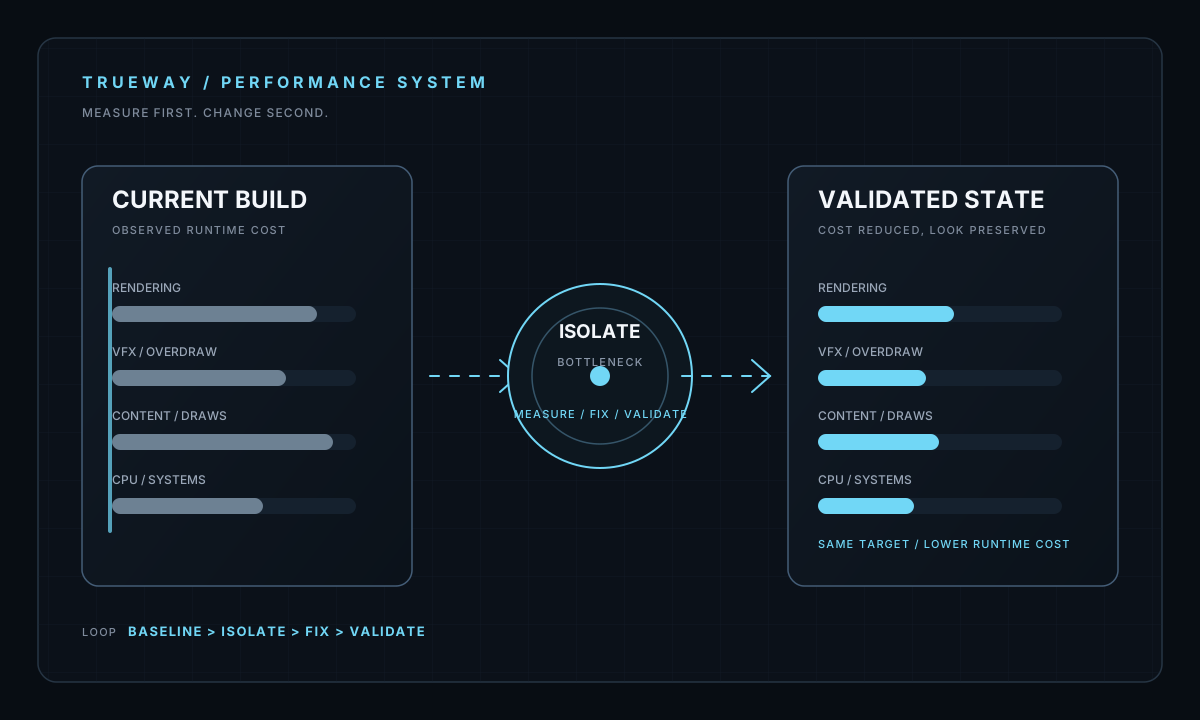
Optimization starts by measuring the target build and separating symptoms from the expensive systems underneath them.
Establish a baseline and isolate CPU, GPU, rendering or content bottlenecks instead of optimizing by guesswork.
Investigate lighting, materials, shaders, VFX, overdraw and rendering choices that scale poorly.
Review meshes, LODs, instancing, textures, draw calls and scene organization around actual runtime use.
Work against the stricter frame budget and hardware constraints of immersive target devices.
What we deliver
The scope can stop at diagnosis or include implementation of the highest-value fixes.
Baseline measurements, bottleneck classification and prioritized areas for investigation.
Focused analysis of rendering, VFX, lighting, assets or runtime systems behind the observed cost.
Targeted changes to the expensive systems when implementation is part of the engagement.
Practical quality/performance tradeoffs for target platforms and production content.
Technology context
The exact toolset depends on engine and platform, but the principle stays the same: measure first, change second.
Unreal Insights, GPU profiling, stat tools and engine-side rendering analysis.
Profiler, Frame Debugger and runtime analysis around the systems responsible for frame cost.
Materials, shaders, overdraw, lighting, meshes, LOD, instancing, textures and draw-call behavior.
Optimization around strict frame budgets, mobile-class hardware and immersive target constraints.
How the work runs
Capture the current behavior on the target build and hardware.
Reduce the problem to the systems responsible for the measurable cost.
Implement the changes with the highest value relative to visual or production impact.
Measure again and confirm that the fix improved the intended bottleneck without moving the problem elsewhere.
Relevant work
Optimization work is presented with the bottleneck, profiling evidence, production constraint and implemented approach where results can be published.
At 4Experience, Bartosz Rozmus contributed level design and optimization for a constrained Google Daydream VR project. The case study keeps the contribution boundary explicit.
Read VR optimization case studyTechnical guide
The selected Insight documents a measurement-first Unreal workflow so performance work begins with frame-time evidence rather than speculative quality cuts.
A practical profiling loop using Unreal Insights, GPU tools and controlled verification of the real bottleneck.
Read the profiling guideRelated services
Rendering, shader and content-system changes when performance and visual implementation overlap.
Explore Technical ArtEffect-specific profiling and redesign when particles, materials or overdraw are the expensive system.
Explore VFXValidation and production tooling that prevents expensive content patterns from returning.
Explore toolsUnreal-specific profiling, diagnosis and remediation.
Unreal optimizationHeadset-specific profiling for strict immersive frame budgets and standalone hardware.
VR optimizationFAQ
No responsible optimization engagement can guarantee an arbitrary gain before profiling the project. The target can be defined, then the real bottlenecks can be measured against it.
Yes. Diagnosis and a prioritized optimization plan can be scoped separately from implementation.
Yes. VR and standalone XR need stricter frame-budget decisions and can be treated as a dedicated optimization context.
Start a project
Send the engine, target hardware, current frame rate or frame-time context and the areas that appear expensive.
Profiler captures are useful, but a short project description is enough to start scoping an audit.
Discuss this service