01
Manual asset processing
Classification, metadata, naming, validation, conversion and batch processing across large file sets.
Supporting capability · Tools & Automation
We build focused, controlled AI systems that plug into existing 3D, realtime, game-development and internal-tool workflows.
Role in the offer
This is not positioned as a separate AI agency. The starting point is a concrete workflow, manual cost, project data and the points that still require human control.
Where AI earns its place
We identify the repetitive cost first, then choose the model, integration and level of autonomy.
Classification, metadata, naming, validation, conversion and batch processing across large file sets.
Reports, logs, documentation, screenshots and data can be analyzed automatically against defined rules.
An internal copilot can retrieve and compose answers from controlled project sources.
AI can support validation between DCC tools, engines, repositories and production systems.
What we deliver
We do not add a separate dashboard by default. The result can live inside an editor, script, internal service or existing tool.
A tool that answers questions, analyzes data and performs limited actions against controlled project context.
Workflows combining text, images, documents, JSON, CSV, metadata and production files.
Deterministic rules can be combined with AI for issue detection, classification and reporting.
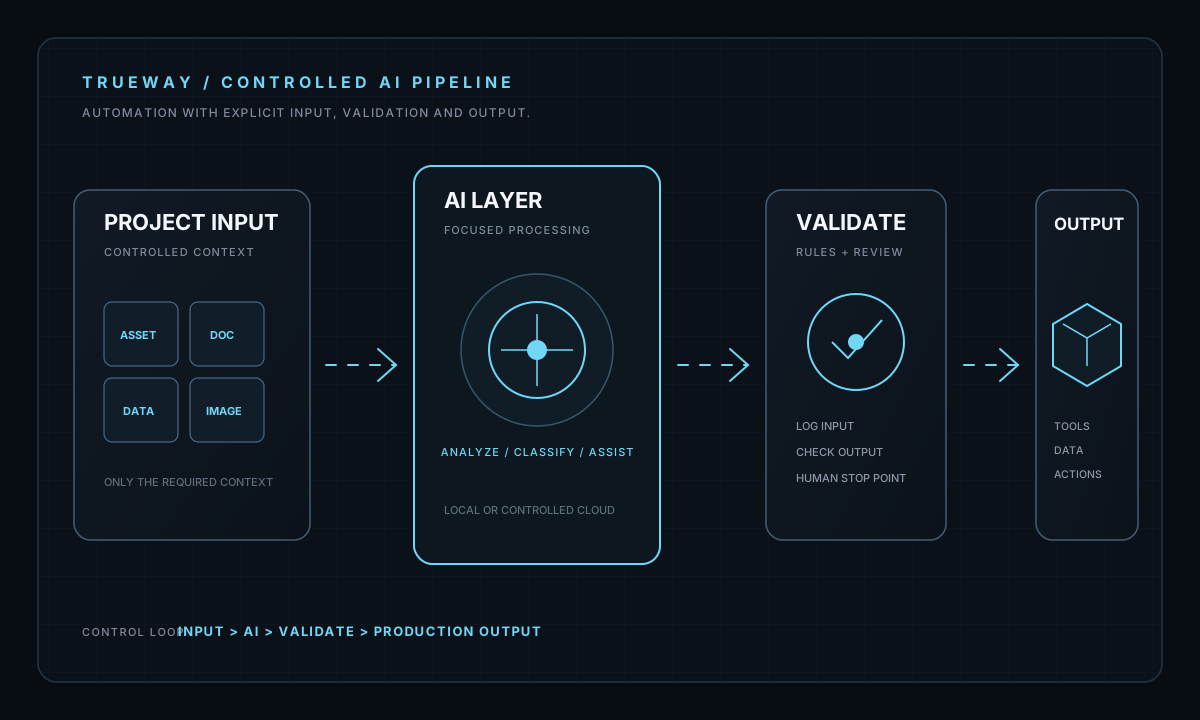
Sequences of constrained steps with logging, validation and stop points before risky operations.
Execution stack


Privacy and control
Architecture follows data sensitivity, cost, latency and the level of control the team needs.
Models can run locally or inside controlled infrastructure when project data should not leave the environment.
Risky operations can require explicit approval instead of full autonomy.
Inputs, outputs and system decisions can be logged when repeatability and diagnosis matter more than AI magic.
How we start
Choose a manual or expensive workflow with a clear input and expected result.
Test whether AI delivers enough quality and time savings before deeper integration.
Add validation, limits, logging and human checkpoints appropriate to the risk.
Connect the solution to the actual pipeline, repository, DCC, engine or internal system.
Compare time, quality, cost and manual steps before and after deployment.
Good first scopes
Automated checking, classification and reporting for assets, files and exports.
Retrieval across controlled documentation, specifications and project knowledge.
Process large file sets with validation and explicit safety rules.
An AI feature embedded directly into the tool used by an artist, designer or developer.
Have a manual bottleneck?
Describe the input, manual steps, output and data constraints. You do not need a finished AI specification.